317 Cricklewood Broadway: A New Student Living Community in North London
Co-living,Student and Hotel


A “Licence to Alter” application, otherwise known as “Freeholder Consent” is a formal written document from the freeholder (or management company, landlord, or freeholder’s solicitor acting on behalf of the freeholder), giving approval to the changes you wish to make to the property.
As a leaseholder, or even a freeholder in certain estates, you might be required to obtain a license to alter prior to making any modifications to your residence.
When trying to obtain a license to alter or freeholder consent, we would recommend consulting with a RIBA Chartered Architecture Practice at an early stage to discus your project, where possible it would be advantageous to provide the Architect with a copy of the lease agreement prior to meeting them.
Your Architect will review your brief and advise on all aspects of the project that will need to be addressed.
In most instances, to start the formal process, you will need to supply the management company with plans and details of the proposed works and alterations, but as noted above it is preferable to consult with the freeholder in advance of making the application to avoid any delays.
Freeholder consent is generally required for any changes to a leasehold property, in larger blocks there are generally restrictions on how contractors enter apartments and the times of day they can work, so it is always important to check.
For owners of freeholder subject to estate management plans, changes to the outside of your house may need the agreement of the owner of the estate. You might also need to get it for internal modifications, too, especially basements.
These rules apply to many owners of properties at London’s most prestigious addresses, including the Grosvenor, Crown, Ayre, Wellcome Trust, Cadogan, Howard de Walden, Portman and Bedford estates.
The large estates have prescriptive processes for making an application for a Licence to alter that includes the information that needs to be submitted with the application, which in turn will define the other consultants that need to be appointed as part of the application process.
Whilst these requirements may sometimes be seen as restrictive and leading to additional cost, there is the benefit that they are clearly defined and the application process can run smoothly.
Where the freeholder is a smaller entity, or is made up of a collective of the other leaseholders in a property, then the process can actually be more complex as they may not be that experienced in dealing with licences to alter and may not already have policies in place to deal with certain proposals put forwards.
In these situations it is even more important for the design team to engage at an early stage with the freeholder to agree on the process for obtaining freeholder consent. It is preferable that the freeholder appointed a suitably qualified surveyor to act on their behalf.
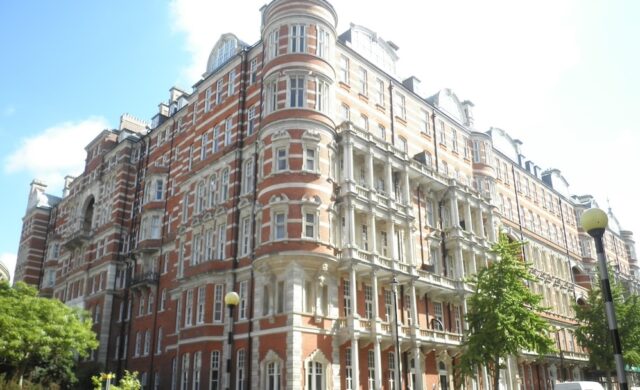
BB Partnership are experts at Freeholder Consent. Visit our ‘86 North Gate‘ case study which details the extensive work we carried out alongside interior designer Turner Pocock (www.turnerpocock.co.uk) on this Grade II listed mansion block.
Whilst it may seem like obtaining freeholder consent is something to do after obtaining planning consent and listed building approval, it is sensible to engage with the freeholder at an early stage as there is potential that the freeholder applies restrictions to development that would influence the design of the scheme submitted to the planners.
Ideally freehold organisations with have a suitably qualified surveyor acting on their behalf to administer the application, which will also cover the implementation of the works themselves. As part of an application the freeholder will require the applicant to also cover the costs of other consultants to check the proposals prepared by the client’s own design team.
The costs vary depending on the complexity of the scheme and the number of other consultants required. Early engagement with the freeholder will establish the complexity and potential costs and can also then influence the proposed scheme.
Some proposals also include changes to the size of the leasehold property or works outside of the demise. For example adding comfort cooling can require external units to be mounted on parts of the building outside of the leasehold property, in which case the freeholder may charge a fee to allow those areas to be used. Another situation is where changes are made to a loft space to create additional habitable floor space and the size of the leasehold apartment increases, again, in these situations the freeholder will require that the leaseholder in effects purchases the additional floor space form the freehold. The same applies to extensions and roof terraces.
Most leasehold agreements include a statement to the effect of the leaseholder must apply to the freeholder for approval to carry out any changes to the property and that the freeholder will not “unreasonably” withhold consent. The test of what is reasonable is somewhat subjective, as such it is preferable for all parties that a suitably qualified surveyor is acting on behalf of the freeholder.
Ultimately, it depends on the individual freeholder and the timing needs to be considered as part of the overall programme for the project.
In addition to freeholder consent, depending on the scope of the project, it may also be necessary to obtain planning approval, listed building consent and building regulations approval. It should be noted though that sometimes the freeholder’s requirements are more restrictive/onerous than those of the planners/building regulations, so it is vital that the design team are aware of the freeholders requirements at the outset of the project or engage with them early to establish the requirements ahead of progressing with planning and building regulations applications.
Party Walls – Quite often changes to leasehold properties require party wall awards to be agreed with neighbouring properties, but even when they are not required it is worth considering the need to have a party wall surveyor carry out condition surveys of neighbouring properties before works commence to protect against claims from neighbours for any damage that they may claim has been caused to their property.
Building Safety Act – The introduction of the Building Safety Act has implications for works to leasehold properties, especially those located in designated High Risk Buildings.
A high-risk building is defined as having at least 7 storeys or being at least 18 metres in height and has at least 2 residential units.
Most leasehold agreements make reference to certain areas being carpeted, however there are now techniques that will allow for timber flooring, or other hard finishes to be installed in flats, that meet the same acoustic performance requirement of carpet. In some instances it is necessary to carry out acoustic testing between properties to establish the performance required and also to carry out post completion testing.
It should also be recognised that licences to alter are a good thing, in that they ensure that the works are carried out to a good standard, which should give comfort to any leaseholder living in an apartment block that whilst the requirements can sometimes annoy them, they are also protected from their neighbours carrying out unsatisfactory works.
BB Partnership have worked on projects on many of London’s major estates, including refurbishment and extensions to Grade I listed properties on the Crown Estate, Grade II Listed Buildings in The Grosvenor, Cadogan, and Wellcome Trust Estates as well as other projects on the Aryre Estate and Portman Estate.
The scale of the projects has ranged from the refurbishment of two bedroom flats to add a second bathroom and relocate the kitchen, to façade retention schemes in Belgravia on the Grosvenor Estate where we have reconstructed the whole house with the addition of a basement.
If you would like us to help with your project, then please do not hesitate to get in touch.
317 Cricklewood Broadway: A New Student Living Community in North London
Co-living,Student and Hotel
Fulham Town Hall: Preserving Heritage Through Adaptive Reuse
Co-living,Student and Hotel
Island Site, Woolwich
Co-living,Student and Hotel
Cameo N7: Transforming Mill Hill with Landscape-Led Living
Multi-Unit Residential
137 Beehive Lane Development, Gants Hill, London
Multi-Unit Residential
Becontree Avenue: Thoughtful Backland Regeneration in Dagenham

We are currently looking for a talented and enthusiastic qualified Project Architect, to join our team, working on a mixture of residential schemes including one-off high-end houses, multiple unit schemes along with shared-living and student housing projects.
To apply for this role please send a short video outlining why you would like to join the team to [email protected]
Applicants should[ … ]
BB Partnership have obtained planning approval to significantly extend a detached house in Chingford following a successful planning appeal against a previous refusal, this article looks at the planning and appeal processes relating to this project.
The detached Edwardian property house located in the Chingford Station Road Conservation Area.
The proposed scheme includes both rear and side extensions at ground and first floor level along with a remodelled roof that will provi[ … ]
BB Partnership’s scheme for 16 new build flats in Hendon has been granted planning permission by Barnet London Borough Council.
The project for Homegrown Property Development, comprising of 6 x 1-bedroom and 10 x2-bedroom flats, is located on previously developed land on a brownfield site off Hendon Way and includes the demolition of an existing storage building and the erection of a part two, part three store building comprising of 16 self-contained flats with associated amenity s[ … ]
BB Partnership has obtained permission for conversion of an existing building to 35 student accommodation units ( of which 5 accessible units) and associated services in Ilford, Redbridge.
The layout of the floor plans has been designed, with minimal intervention to the existing fabric, to provide the larger studio units with excellent views out over the adjacent Valentines Park to the East and a smaller number of cluster units with a private lobby and access to the shared kitc[ … ]
BB Partnership has obtained planning approval from Camden Council to partially demolish and rebuild No.11-13 Kings Terrace and to demolish and rebuild No.15 Kings Terrace.
The proposal consists of providing new office accommodation at basement and ground floor level at No.11-13 Kings Terrace with 2no new 2 bed flats above and a new 3 bed mews house at No.15 Kings Terrace.
We are delighted to share that after a thorough and lengthy process, the London Borough of Hammersmith & Fulham has granted their consent for our Section 73 application to vary a previous approval.
This approval paves the way for the transformation of the historic Fulam Town Hall into a stunning 90-bed hotel, along with an array of integral and ancillary facilities.
The project will not only breathe new life into the cherished Grade II* Listed Building but also serve as a[ … ]