Cameo N7: Transforming Mill Hill with Landscape-Led Living
Multi-Unit Residential


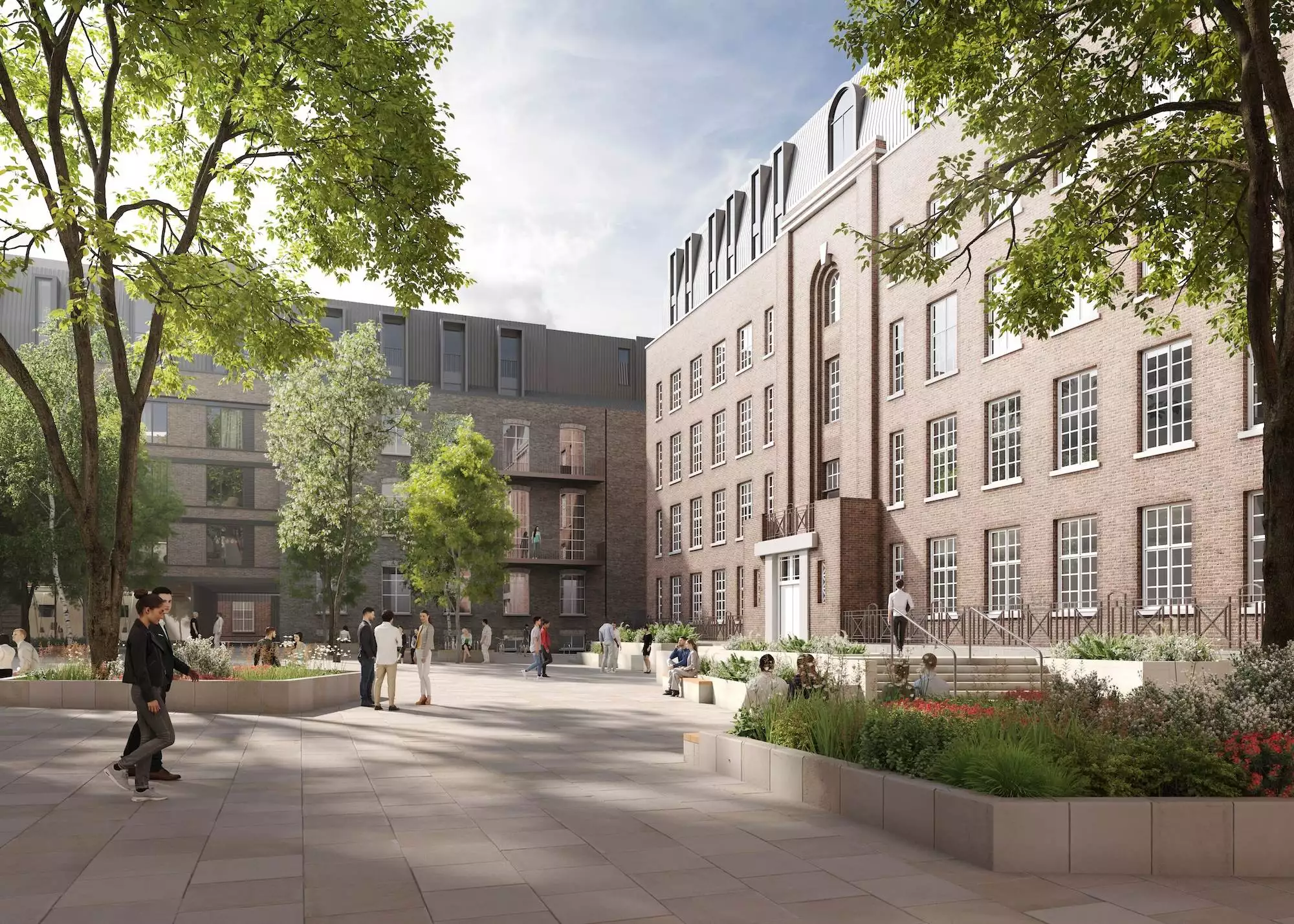
BB Partnership secured planning permission for the transformation of the Island Site in Woolwich into a dynamic mixed-use development, creating new homes, workspaces, and community spaces while preserving its architectural heritage. The scheme delivers 485 co-living apartments, 20 affordable homes, and 3,200 sqm of commercial and community space, contributing to Woolwich’s regeneration.
Located in the Bathway Quarter Conservation Area, the site includes several Grade II-listed and locally listed buildings, including the former University of Greenwich building. The previous planning permission proposed significant demolition, which was revised to prioritise retention and adaptive reuse.

The new buildings, rising to six storeys, respect the area’s scale while enhancing key heritage views, including those of the Grade II Listed former Town Hall*. The conversion of historic structures ensures a balance between conservation and modern living needs.
The architecture integrates a sensitive approach to heritage assets, ensuring that the existing character of the area is maintained while introducing contemporary design solutions. The retained buildings have been carefully restored, with original façades and internal features preserved where possible, while new additions incorporate a palette of materials that complement the surrounding context.
By prioritising adaptive reuse and minimising demolition, the project reduces embodied carbon and aligns with sustainable best practices.

A key element of the scheme is its emphasis on public space improvements. A central landscaped square serves as a focal point, providing seating, planting, and social spaces for residents and visitors alike.
To further enhance the area, the scheme introduces:
Developed in collaboration with the Royal Borough of Greenwich, Historic England, TfL, and the GLA, the scheme evolved through a Planning Performance Agreement (PPA) and extensive public consultation. This iterative engagement process helped shape a development that is both commercially viable and respectful of its historic setting.

BA [Hons], Dip Arc, RIBA
Director

BA [Hons], Dip Arc, RIBA
Director

BA [Hons], Dip Arc, RIBA
Director
Cameo N7: Transforming Mill Hill with Landscape-Led Living
Multi-Unit Residential
137 Beehive Lane Development, Gants Hill, London
Multi-Unit Residential
82-84 Mitcham Lane: A Strategic Mixed-Use Redevelopment
Multi-Unit Residential
Hendon Way Development, Hendon, London
Multi-Unit Residential
Redevelopment of Pollokshields West Church, Glasgow
Multi-Unit Residential
155 Chingford Road Development, Walthamstow
Executive/Delivery Architects, Multi-Unit Residential
