
Advice from BB Partnership based on experience delivering projects across Grade I, Grade II* and Grade II listed buildings.
Developing a listed building can be hugely rewarding, but it comes with a level of scrutiny and complexity very different from working with unlisted stock. Whether the project involves refurbishment, conversion or extension, understanding how listed building rules affect design, planning and construction is essential. Successful projects depend on balancing modern requirements with the protection of historic character, ensuring that change is carefully considered rather than avoided. Decisions are influenced not only by planning policy and Building Regulations, but also by the protection of historic fabric and the significance of the building itself.
In England, buildings are listed in three categories: Grade I, Grade II* and Grade II. Each carries legal protection and any alterations require Listed Building Consent.
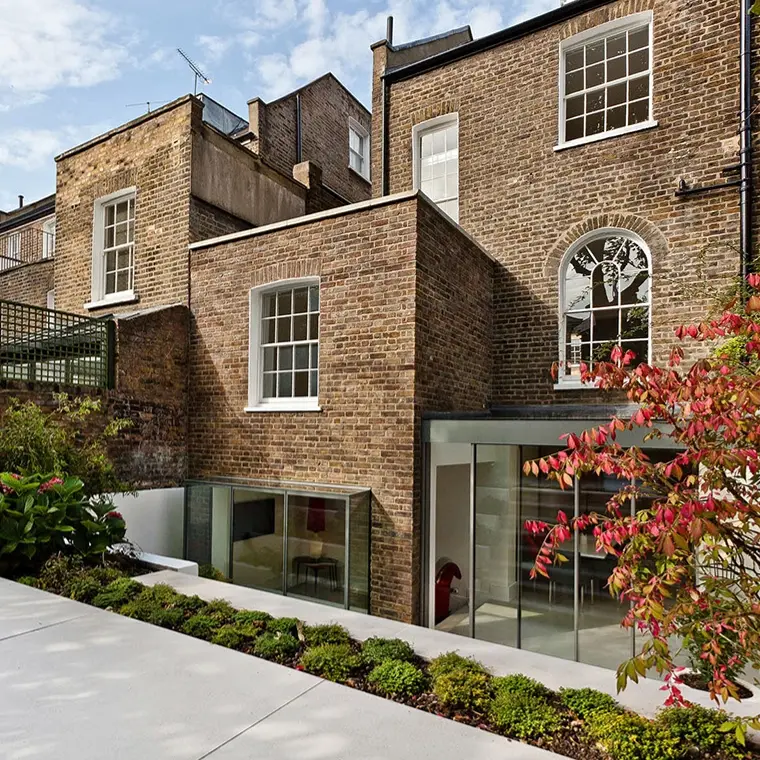
At BB Partnership, we regularly work with listed buildings. Our current projects include the refurbishment of two Grade I listed residential properties within the Crown Estate and the conversion of the Grade II* listed former Fulham Town Hall into a hotel, alongside work on a number of Grade II listed residential properties.
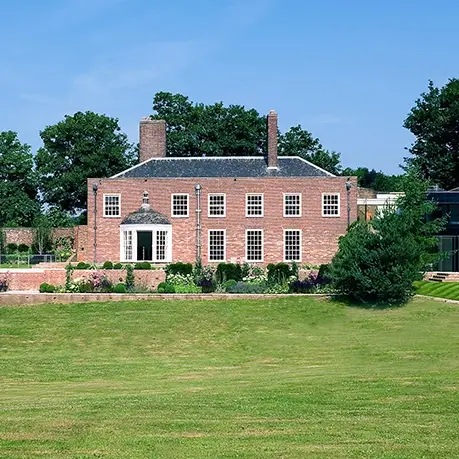
Previously we have also worked on several Grade I properties within the Crown Estate, the Grade II* listed Gaynes Park mansion buildings, as well as a significant number of Grade II listed properties.
These projects have required close collaboration with conservation officers, heritage consultants and specialist contractors to ensure that proposals both protect historic significance and allow buildings to evolve for modern use.
Alongside our heritage experience, our work also places a strong emphasis on building performance, occupant comfort and responsible energy retrofit.
From that experience, a number of key themes repeatedly emerge when developing listed buildings.
If you’re new to working with listed buildings, it’s worth first understanding the different listing grades and what they mean in practice. We’ve covered this in more detail in our article: What are the different types of listed building?
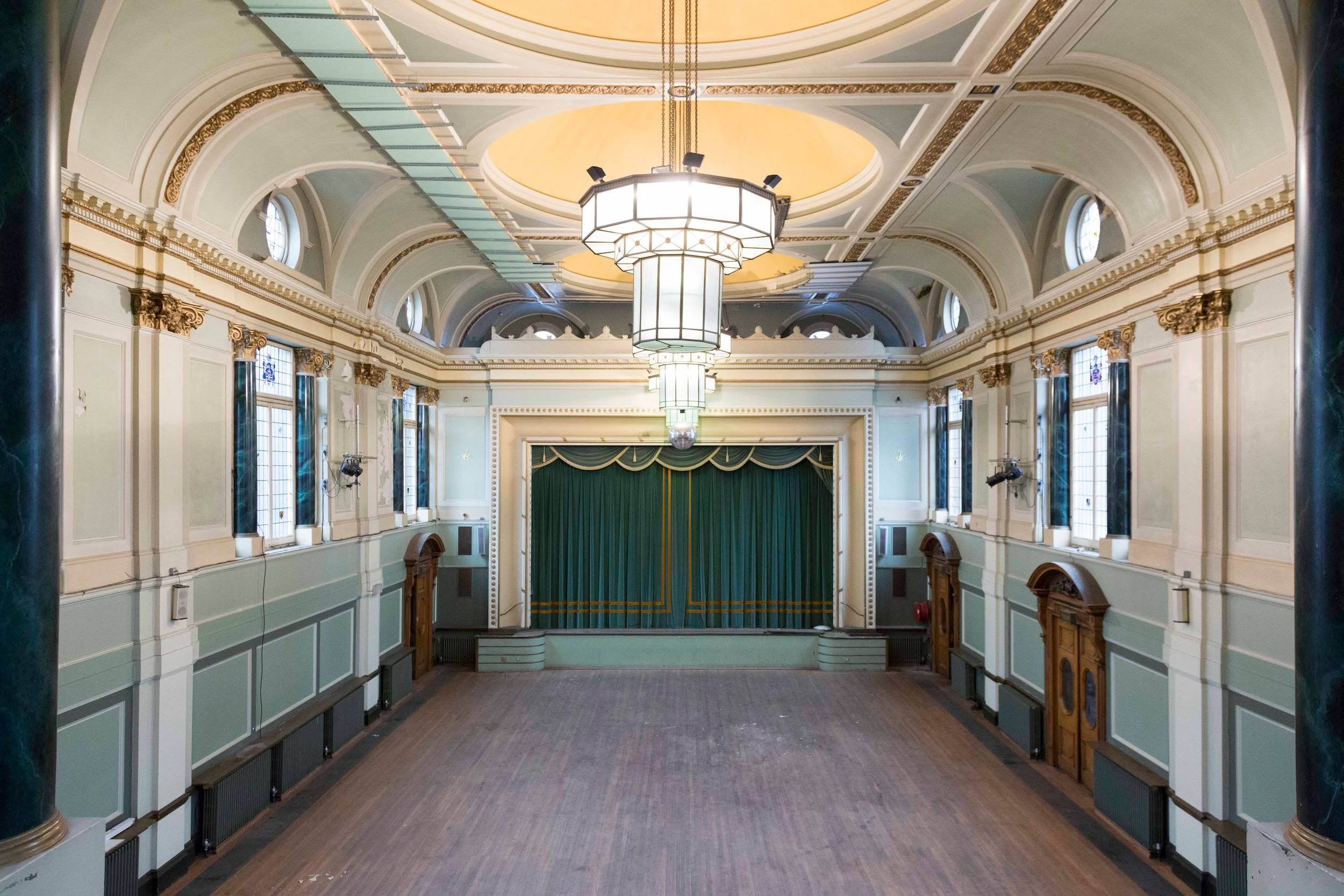
Grade II* Listed – Former Fulham Town Hall – Planning approval and listed building consent have been obtained to convert the building to a hotel.
The first and most important principle when working with a listed building is understanding and respecting its historic fabric.
Listed status protects more than just the external appearance of a building. It can include:
Successful proposals start with understanding what is significant and why. This normally involves careful surveys, historic research and, where appropriate, input from heritage consultants.
Before developing proposals, it is always worth carefully reviewing the building’s listing description.
The description often identifies the architectural features and elements that contributed to the building being listed. While it is not a definitive schedule of what is protected, it provides useful insight into what may be considered particularly significant.
Understanding this description at an early stage can help focus design proposals on areas where change may be more acceptable.
When reviewing the listing description of a building you may sometimes see the term “GV”, which refers to Group Value.
This designation indicates that a building is considered significant not only in its own right but also because of its relationship to surrounding buildings. A property may form part of a terrace, square, estate layout or historic streetscape that has collective architectural or historic importance.
Where a building has Group Value, the local authority will often consider proposals in the context of the wider group of buildings, not just the individual property. This can influence decisions on alterations that might affect the appearance or character of the group as a whole.
Understanding whether Group Value forms part of the listing can therefore be important when assessing what changes may be acceptable.
Listing protection can also extend to structures within the curtilage of a listed building, such as boundary walls, railings, gates and outbuildings.
Even if these structures are not individually listed, they may still be protected if they pre-date 1948 and form part of the historic setting of the listed building.
Proposals involving these elements may therefore also require Listed Building Consent.
One aspect that is frequently overlooked is the importance of the historic footprint of a building.
Historic footprint refers to the original or historic floor plan and spatial arrangement of a property. Even where alterations are proposed, it is often important that the original layout can still be understood.
For example, if two rooms are being opened up to create a larger space, conservation officers may require the retention of wall nibs and a downstand beam within the opening.
These details allow the original layout of the building to remain legible, ensuring that the historic plan form can still be understood and interpreted even after alterations have taken place.
This is particularly relevant in historic townhouses, where rooms are sometimes opened up for modern living but the underlying plan form can still be read through retained structural elements.
Understanding this principle early in the design process can avoid unnecessary redesign later in the planning or listed building consent process.

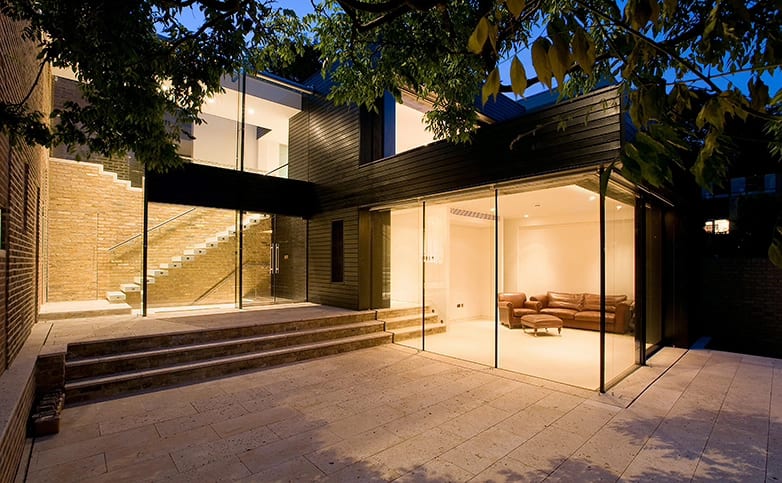
A common misconception is that listed buildings cannot accommodate modern extensions. In practice, well-designed extensions can often be supported where they respect the significance of the historic building.
In some cases, a clearly contemporary intervention can be preferable to an imitation historic addition, as it allows the new work to be read separately from the original fabric.
Key considerations typically include:
When carefully designed and supported by a clear heritage justification, extensions can help listed buildings remain functional and viable for modern use while ensuring that new work is clearly distinguishable from the historic fabric.
Where new interventions are proposed, conservation officers often favour solutions that are reversible, meaning future changes could be removed without causing permanent damage to the historic building.
Designing alterations in a way that minimises irreversible change can help proposals gain support while ensuring that future generations retain flexibility in how the building evolves.
Listed buildings are sometimes assumed to be incompatible with energy improvements. In reality, this position has evolved significantly.
Historic England has published guidance supporting a more pragmatic approach to improving energy performance in historic buildings, including:
However, these improvements need to be approached with care. Many historic buildings have survived for centuries through a combination of breathable construction and naturally “leaky” ventilation. Suddenly sealing up a building with new windows, non-breathable plaster or render, or poorly installed insulation can unintentionally create problems with moisture, damp and internal humidity.
At BB Partnership we are strong advocates of low-energy design and improved comfort for occupants. Our team includes Certified Passive House Designers and graduates of the AECB CarbonLite Retrofit programme, and we recognise the significant benefits that carefully considered energy improvements can deliver. However, improving performance in historic buildings requires an understanding of how traditional construction manages air movement, moisture and vapour permeability, so that retrofit measures enhance comfort and efficiency without introducing unintended risks.
The key is demonstrating that improvements are carried out in a way that respects the building’s significance and the way the historic fabric manages moisture and ventilation.
Introducing modern building services into historic buildings can be challenging. Mechanical ventilation systems, heating installations, electrical upgrades and modern plumbing all need to be carefully integrated to avoid damaging historic fabric.
Early coordination between architects, building services engineers and heritage consultants can help ensure these systems are introduced discreetly while preserving significant architectural features.
Listed Building Consent (LBC) is a separate statutory consent from planning permission.
A common misconception is that if planning permission is granted, works to the building will automatically be acceptable from a heritage perspective. This is not the case.
In practice, it is not unusual for planning conditions and Listed Building Consent conditions issued by the same local authority to pull in slightly different directions. Ideally, this should be discussed with case officers during the application process.
For example, proposals to improve insulation, acoustic separation or other technical aspects of a building may conflict with heritage requirements to retain historic materials or construction.
Navigating these tensions is a normal part of working with listed buildings.
In some circumstances, the statutory protection afforded to listed buildings may limit the extent to which certain Building Regulations requirements can be achieved, meaning that alternative approaches may need to be agreed where full compliance would harm historic fabric.
Projects involving listed buildings often require additional time in the planning and consent process compared with standard developments.
Design proposals are typically reviewed by conservation officers, planning officers and sometimes external consultees such as Historic England. Revisions are often required to ensure proposals appropriately balance heritage protection with the intended use of the building.
Allowing sufficient time in the programme for this dialogue can significantly improve the chances of achieving a positive outcome.
Pre-application discussions with the local authority conservation team can often be worthwhile, particularly on more complex projects.
These conversations allow proposals to be tested early and can help identify issues before significant design work is undertaken.

Another important point for owners and purchasers to understand is that there is no concept of deemed approval for listed building works.
If alterations have been carried out without Listed Building Consent, even by previous owners, the current owner can still be required to reverse those works.
This can include relatively small changes such as:
For this reason, careful due diligence when purchasing a listed building is essential.
Listed Building Consent is very specific. Approval only applies to the works that are clearly described within the consented drawings and documentation.
If the scope of work changes during the project, additional consent may be required. This can apply to items that might normally be considered minor on other projects, such as:
This is why it is important to prepare applications that capture as complete a scope of works as possible.
Early investigation of the building is vital. Opening-up works, surveys and historic research help ensure the design team fully understands the building before applications are submitted. However, significant opening-up works may themselves require Listed Building Consent and should be discussed with the local authority conservation officer in advance, often through a pre-application enquiry. In many cases, a limited programme of investigative works can be agreed to inform the subsequent application.
A well-prepared application reduces the risk of needing additional consent later in the construction phase, which can introduce delays once works are underway.
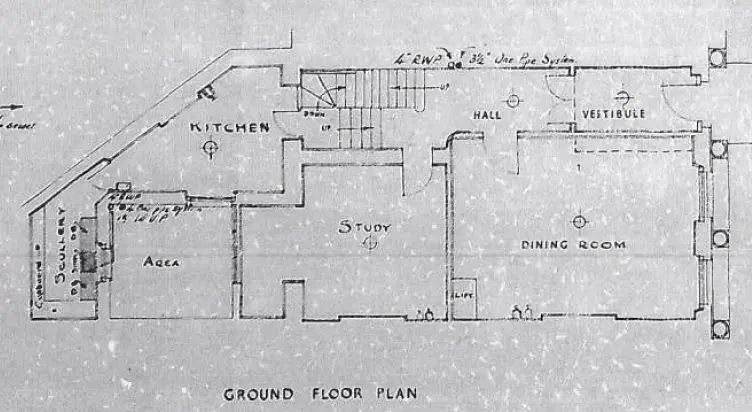
1949 drainage plan of this Grade I listed property. Historic archive drawings helped demonstrate that a rear extension had previously existed and been removed, allowing our proposal to reinstate it to be justified within the planning and Listed Building Consent applications.
Even with thorough surveys, listed buildings can still present unknown conditions during construction. Historic fabric may conceal structural alterations, hidden services or previous repairs that only become apparent once work begins.
Because changes to approved works may require further Listed Building Consent, contractors and design teams need to approach works carefully and maintain close communication with the local authority if unexpected issues arise.
Allowing appropriate contingency in programme and budget is an important part of managing this risk.
Looking at the planning history of nearby or similar listed properties can be extremely valuable.
In many cases, heritage consultants can also undertake historic archive research that predates modern planning records. These investigations can reveal:
This information can often be used to support proposals and justify change.

Listed buildings are sometimes perceived as restrictive, but in reality they present an opportunity to work with architecture of real character and history. With careful research, thoughtful design and a clear understanding of heritage principles, meaningful change is entirely possible while preserving what makes these buildings special.
When handled well, listed building projects can deliver distinctive and valuable properties that are difficult to replicate through new-build development alone.
Early advice and careful design thinking are often the key to achieving the right balance between heritage protection, building performance and modern use.

BA (Hons), Dip Arch, RIBA
Director

BA (Hons), Dip Arch, RIBA
Director

BA (Hons), Dip Arch, RIBA
Director