

Westminster City Council is moving to formally embed a Retrofit First approach within its planning framework, representing a significant shift in how development proposals are assessed across the borough. The policy requires applicants to demonstrate that all reasonable options for retaining, retrofitting and adapting existing buildings have been fully explored before demolition and redevelopment will be supported.
In parallel, the council is strengthening its affordable housing requirements, signalling a more interventionist planning environment with direct implications for landowners, developers and design teams working in Westminster.
At BB Partnership, we welcome the clarity this policy brings. Retrofit-led development has long been central to our approach, particularly on complex urban sites where heritage, carbon reduction, planning risk and viability intersect.
The rationale behind this approach is clear. The council has identified the built environment as accounting for around 90% of borough-wide carbon emissions, far higher than the national average. In this context, demolition and rebuild schemes carry a significant embodied carbon penalty that can take decades to offset through operational efficiencies alone.
By prioritising adaptive re-use, Westminster is aligning itself with a growing group of London authorities, including the City of London, Camden and Ealing that now expect applicants to justify demolition rather than assume it.
For developers, this represents a shift from a design-led argument to an evidence-led one. Retrofit options will need to be tested seriously, costed properly and assessed against carbon benchmarks before redevelopment is considered acceptable.
The policy is reinforced by the introduction of embodied carbon targets for all new developments, based on LETI benchmarks. While new homes are given slightly more flexibility than other building types, the direction of travel is unmistakable.
In practice, this means:
This reinforces the importance of bringing sustainability, structural and cost advice together at the outset of a project.
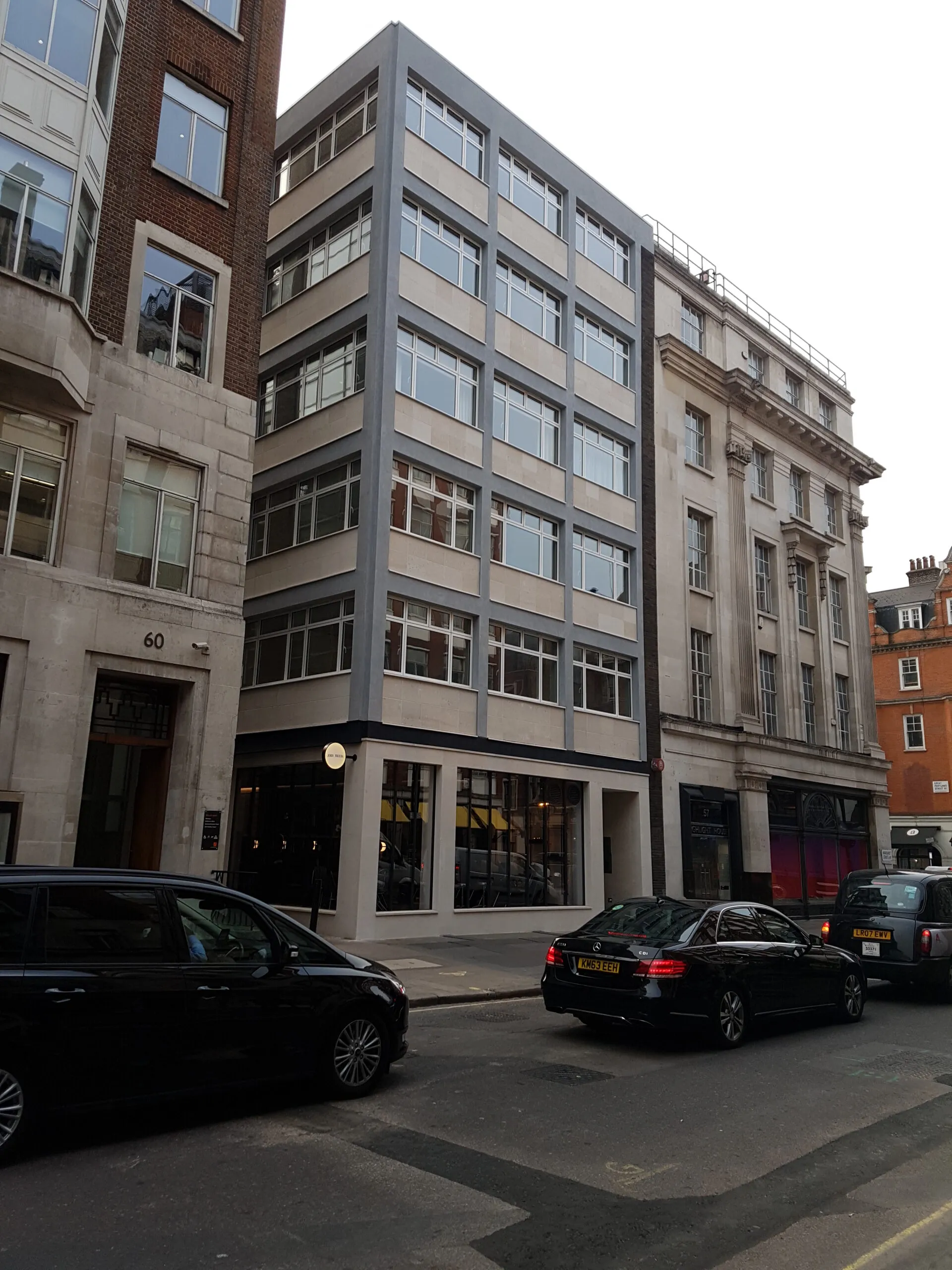
This project involved the comprehensive refurbishment and re-planning of a prominent corner building in Westminster, delivering retail space at ground and basement levels with five apartments above. The existing structure was retained and adapted, with the addition of a sixth floor and roof terrace, allowing the scheme to respond to contemporary residential standards while preserving the building’s distinctive 1960s character. The external shell was refurbished using Portland stone cladding, refacing of the concrete frame and new windows.

In parallel with its retrofit-led stance, Westminster has significantly increased its affordable housing expectations:
These changes will inevitably affect viability, particularly on constrained brownfield sites. Retrofit-led schemes, where demolition costs and embodied carbon impacts are reduced, may offer a more resilient route through the planning process than wholesale redevelopment.
BB Partnership has extensive experience delivering adaptive re-use and refurbishment projects across London and beyond, including:
On many projects, retaining existing structures has not only reduced embodied carbon but also improved planning outcomes and programme certainty.
Our approach is pragmatic rather than ideological: retrofit is not always the right answer, but it should always be properly explored. Westminster’s policy now makes that expectation explicit.
Westminster’s move is likely to influence policy direction across other central London boroughs. For developers and investors, the ability to unlock value through intelligent reuse, careful technical delivery and sustainability-led design will become an increasingly important differentiator.
At BB Partnership, adaptive re-use is already a core part of our practice. We see Retrofit First not as a constraint, but as an opportunity to deliver lower-carbon, policy-compliant and commercially robust schemes across a range of residential typologies, in some of the UK’s most challenging planning environments.
If you are considering a project in Westminster and would like to discuss how a retrofit-led approach could support planning, viability and delivery, we would be pleased to talk.

BA (Hons), Dip Arch, RIBA
Director

BA (Hons), Dip Arch, RIBA
Director

BA (Hons), Dip Arch, RIBA
Director