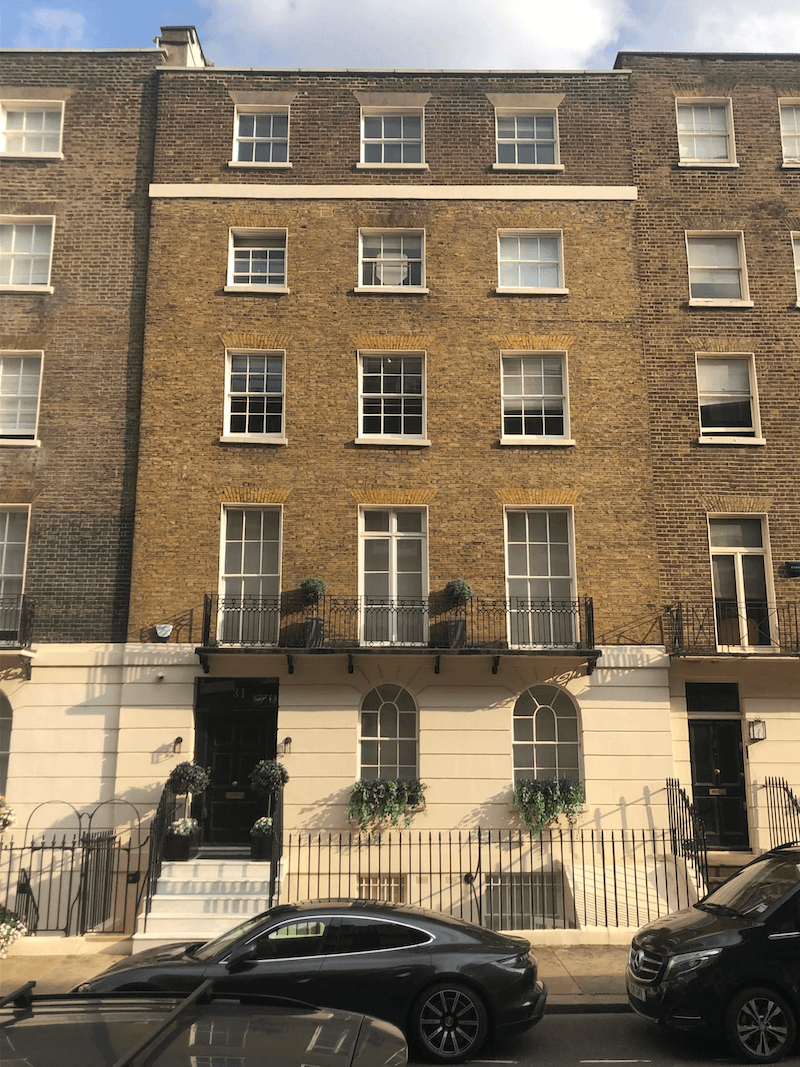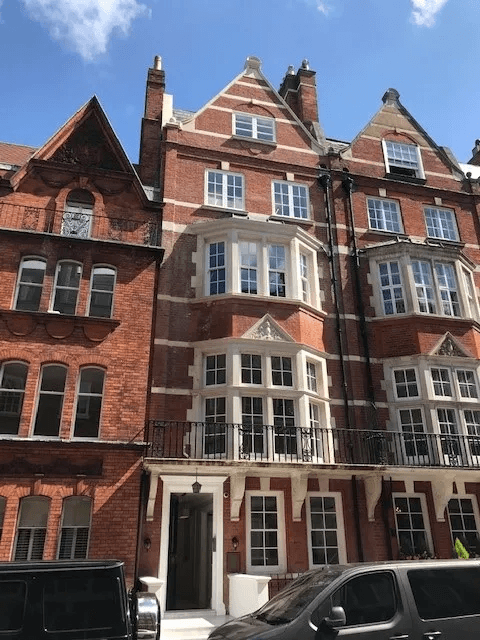

The Grosvenor Estate is one of London’s most significant historic landholdings, with ownership in Belgravia and Mayfair dating back to the early 18th century. These areas were developed as coherent townscapes, with carefully planned townhouses, mews streets and formal squares.
This long-term stewardship has resulted in areas of exceptional architectural quality, much of which is now protected through listing, conservation area designation and Estate Management Schemes. Grosvenor’s continued involvement in the management of the Estate reflects a commitment to preserving this character over generations.
For today’s owners and developers, this history directly informs how alterations, extensions and refurbishment are assessed and controlled.
Works within the Grosvenor Estate are not governed solely by leasehold arrangements.
Grosvenor’s Estate Management Schemes apply to many freehold as well as leasehold properties, and may require Estate consent for:
As a result, freehold ownership does not remove the need for Estate approval.
A large proportion of Grosvenor Estate properties are:
Most substantive projects therefore require planning permission and Listed Building Consent, in addition to Grosvenor consent.
An important point to understand early is that:
It is possible to secure planning or listed building consent from Westminster for elements that Grosvenor will not approve.
This potential divergence can affect feasibility, programme and risk, particularly on larger or higher-value schemes.
On major refurbishments, basements or commercial projects, early dialogue with Grosvenor is essential.
Grosvenor publish a detailed technical document, The Grosvenor Specification, which governs maintenance, alterations and additions across the Estate. It sets out prescriptive requirements covering structure, excavation, materials, windows, services, ventilation, fire strategy and site operations.
The specification makes clear that variations will not be permitted without written consent, making early alignment critical.
Grosvenor’s involvement extends beyond design approval. The Estate typically exercises close control over how works are carried out, including:
Non-compliance can affect programme and, in some cases, the validity of Estate consent.
Certain locations introduce further layers of control. Some mews streets, such as Belgrave Mews West, are private roads owned by the Estate.
In these cases, Grosvenor may:
These constraints should be understood early, particularly where programme certainty is critical.
Where works to a leasehold property result in an increase to the demised area, the creation of additional habitable accommodation, or a change of use (for example from office to residential), Grosvenor may require a premium to reflect the change in value, with proposals assessed on a case-by-case basis.
This can materially affect project viability and should be factored in at an early stage.

BB Partnership has extensive experience working within the Grosvenor Estate, including:
We regularly coordinate Grosvenor approvals alongside Westminster planning, listed building consent and building regulations, allowing potential conflicts to be identified and managed early.
Whether you are:
early, informed advice can significantly reduce risk.
If you are considering works within the Grosvenor Estate, BB Partnership would be pleased to discuss how we can help.

BA (Hons), Dip Arch, RIBA
Director

BA (Hons), Dip Arch, RIBA
Director

BA (Hons), Dip Arch, RIBA
Director