

In our recent article on the Warm Homes Plan, we explored how the government is funding upgrades to the UK’s existing housing stock — improving insulation, replacing boilers, and helping landlords meet EPC targets by 2030.
But what about new homes? That’s where the Future Homes Standard (FHS) comes in.
In short, while the Future Homes Standard is often referred to as a “2025 target,” in reality the first new homes built to the standard are likely to be on site from late 2026 onwards, with full adoption by 2028.
Although the final details won’t be confirmed until 2025, the key features are clear:
While the Future Homes Standard is focused primarily on reducing carbon emissions and improving energy efficiency, there is increasing momentum to address water efficiency in parallel.
The Future Homes Hub, working with Defra and industry bodies, has published a “Water Ready” roadmap setting out how new homes could meet tighter water-use standards. Instead of the current theoretical approach, the proposal suggests a fittings-based system, where taps, showers, and toilets must each meet specified efficiency levels.
Emerging targets aim to reduce average water use to:
Although water consumption isn’t yet formally part of the FHS, developers should expect updates to Part G of the Building Regulations in the future. This will align new homes not only with energy and carbon goals but also with the UK’s growing need to conserve water resources.
For developers, this means that planning new schemes today should also consider future requirements around water efficiency, ensuring homes are both energy and water resilient from the outset.
Together, these two initiatives are designed to tackle the UK’s housing challenges from both ends: upgrading what we already have while ensuring new homes meet the standards of the future.
This means that schemes being prepared for planning today must already consider the implications of the FHS, including:
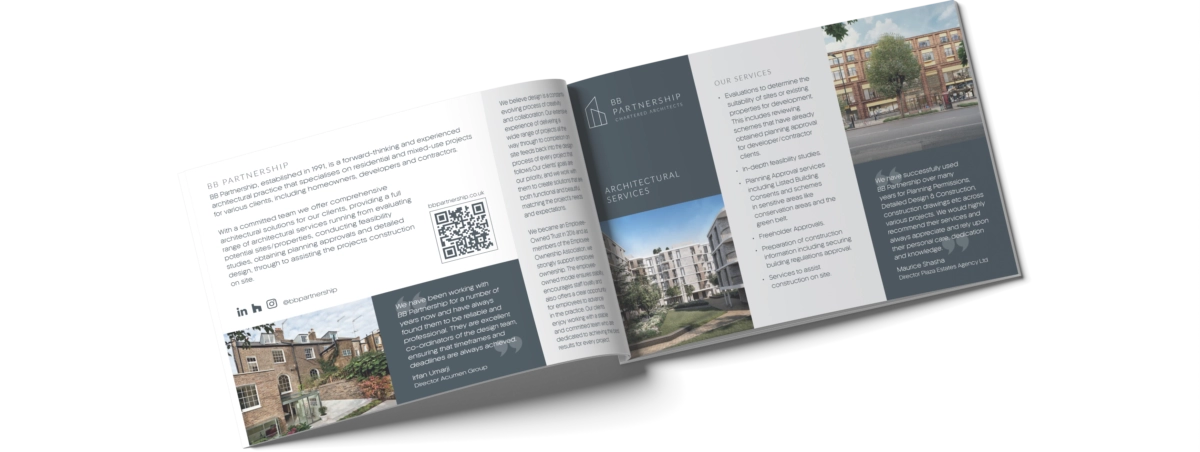
At BB Partnership, we are already delivering schemes that go beyond today’s standards. Our large-scale co-living, purpose-built student accommodation (PBSA), and traditional residential projects all comply with the ambitious energy targets of the London Plan and the requirements of the respective London boroughs where they are located. This means our projects are already designed to meet, and in many cases exceed, the performance benchmarks that the Future Homes Standard will introduce nationally.
The Future Homes Standard will be the most significant change to Building Regulations in a generation. While the Warm Homes Plan addresses today’s existing stock, the FHS sets the rules for tomorrow’s homes.
At BB Partnership, we are already designing schemes that look beyond compliance, drawing on our Passive House expertise, understanding of AECB CarbonLite Standards, and proven track record of meeting London Plan energy targets to ensure developments are both futureproof and market-ready.
If you are a developer preparing a new scheme, talk to us about how to integrate Future Homes Standard principles from the outset.

BA [Hons], Dip Arc, RIBA
Director

BA [Hons], Dip Arc, RIBA
Director

BA [Hons], Dip Arc, RIBA
Director