

If you’re planning a building project in England or Wales that involves work on or near a shared wall, boundary, or neighbouring building, the Party Wall etc. Act 1996 is a critical legal consideration. The Act outlines procedures for notifying and coordinating with neighbours when construction works might affect their property—even in cases where no party wall exists.
At BB Partnership, we don’t act as party wall surveyors. We believe this is a specialist role involving significant technical and legal responsibilities. However, we have a strong understanding of how to design and manage projects that minimise risk, reduce disruption, and integrate Party Wall matters early into the build programme.
In this article we look at some aspects of the process, but this is not intended to be a definitive guide to the party wall act and our advice is always to contact an party wall surveyor.
The Party Wall etc. Act 1996 applies in England and Wales and provides a legal framework for certain types of construction work that could affect neighbouring structures. It gives property owners the right to carry out essential works while ensuring that adjoining owners are protected through proper notification, inspection, and dispute-avoidance mechanisms.
If a neighbour does not consent to your notice, or if formal oversight is preferred, one or more party wall surveyors are appointed to prepare an Award. This document outlines:
Surveyors are appointed not to act on behalf of the individual owners, but on behalf of the wall—ensuring the work is carried out responsibly and that adjoining properties are protected. It is not a negotiation for neighbour “approval”; you already have the legal right to carry out the works. The Act exists to ensure they are done properly and safely.
You must serve notice under the Act if your project involves:
This may include:
Even seemingly minor works can fall within the scope of the Act. Failure to follow the process can result in project delays, legal action, or strained relationships with neighbours.
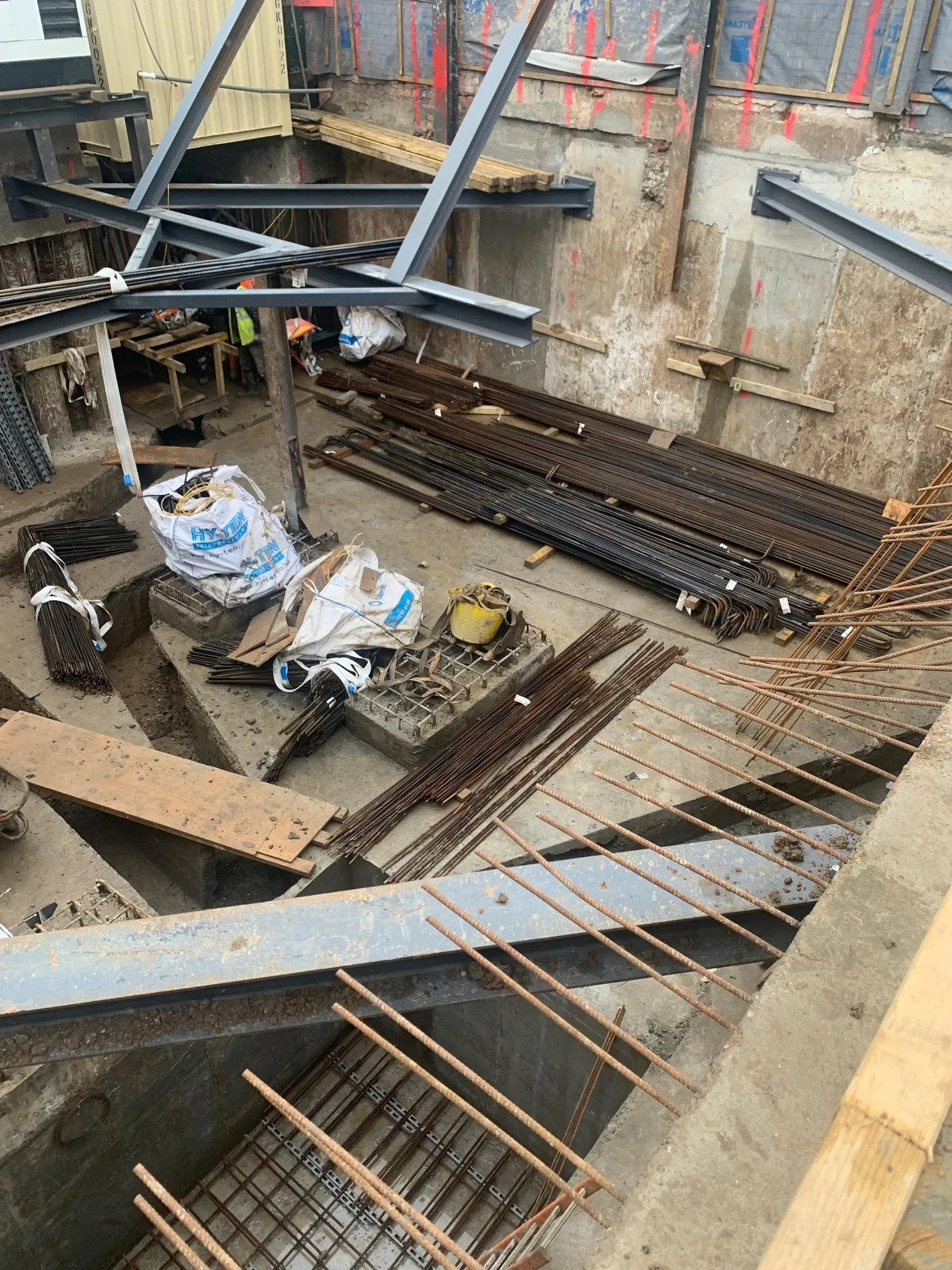


Our project in Stamford Hill for the demolition of an existing semi-detached house and rebuilding a new property that included a basement was complex in terms of the structural engineering solutions required, but the party wall process also includes relatively simple works as well that may only relate to the inside of a property including changes to the internal layout.
One of the most frequently misunderstood triggers for the Act is excavation. Even if there is no shared wall, notice must be served if you plan to excavate:
This situation commonly arises with:
To de-risk this process, we recommend working with your structural engineer early on to determine the likely depth of the neighbouring foundations and assess whether notices are required. But as a general rule of thumb foundations for new extensions or buildings will generally be deeper than those of an existing property as the depth of existing foundations will generally be shallower the older a building is.
If your property or the adjoining property is formed of flats, the situation is often more complex. In most cases, you will need to serve notice on both the leaseholder and the freeholder, and potentially obtain separate Party Wall Awards for each.
Note that tenants (renters) are not party to the process—only those with a legal interest in the property (freeholders or leaseholders) are involved.
Once it is confirmed that the Party Wall Act applies, the process typically unfolds as follows:
While the Act does not require a qualified party wall surveyor to serve notices, at BB Partnership we strongly recommend that a party wall surveyor is involved from the outset. This ensures:
Getting it right early helps prevent re-issuing notices, avoids invalid notices, and improves coordination with neighbours and their advisors.
The adjoining owner may:
If they do not respond within 14 days, dissent is assumed and a surveyor must be appointed on their behalf to draw up the award, although in this instance a detailed condition survey cannot be prepared.
While it is possible for neighbours to simply “agree” to the works, a formal Party Wall Award provides several advantages:
Although there is a financial cost, the benefits often outweigh the risks—particularly for more intrusive or structural work.
Under the Act, special foundations refer to reinforced concrete foundations (often including steel rods or mesh) that extend beneath the adjoining owner’s land. These are commonly used in basement construction and piled wall systems.
Crucially:
Early consultation with your engineer and surveyor is essential if your design involves these foundations.
Yes. Although not standard, adjoining owners may request that a separate structural engineer review the proposals—particularly if the works are complex or sensitive. This request is evaluated by the surveyors, and if deemed reasonable, the building owner typically bears the cost.
A neighbour can request security for expenses, requiring the building owner to place funds in escrow to cover potential repairs or unfinished work. This is especially relevant for complex or high-risk works such as:
The amount is determined by the surveyor and held as a safeguard until the works are complete and inspected.
While the legal process is managed through notices and surveyors, the contractor on site plays a key role in:
Choosing an experienced contractor who understands the practical implications of the Award is critical to maintaining goodwill and compliance.
The Act provides the legal right to access a neighbour’s land (with notice) if it is necessary to carry out the approved works—e.g.:
This must be managed sensitively, with clear notice and defined working hours. The right is not automatic for all situations, and misuse can result in legal challenge.
It is important to note that the access relates only to the party wall relevant matters and would not apply when building a new boundary wall that is not a party structure.
Carrying out notifiable works without an Award is a breach of the Act. Consequences include:
It is always advisable to resolve matters correctly before work starts.
If the design or method of construction changes after the Award is agreed:
This highlights the importance of finalising your design and sequencing before serving notices.
Yes. If you enclose onto or use an existing party wall, you may be required to compensate the adjoining owner. Typically, this involves:
No. The Party Wall Act does not grant permission to oversail your neighbour’s property with scaffolding. For that, you’ll need:
However, the Act does provide limited rights of access to neighbouring land for construction, such as finishing a wall or installing waterproofing—provided it’s necessary and appropriate notice is given.
At the end of the project:
Complying with the Party Wall Act may involve:
While this does increase project costs, these expenses are minimal compared to the risk of legal claims, delays, or forced redesigns.
Although we do not act as party wall surveyors, we play an important role in helping our clients navigate the process effectively:
Our aim is to streamline the process, reduce friction, and keep your project progressing with clarity and confidence.
Whether you’re planning an extension, a basement, or internal alterations to a flat, understanding your Party Wall obligations is essential. BB Partnership can help you anticipate and mitigate issues early—while working in collaboration with experienced party wall professionals.
Contact us today to discuss your project

BA [Hons], Dip Arc, RIBA
Director

BA [Hons], Dip Arc, RIBA
Director

BA [Hons], Dip Arch, RIBA
Director