

Successful residential projects depend on a strong and well-structured relationship between architect and interior designer. When collaboration is established early and roles are clearly understood, the result is not only a compliant and well-coordinated building, but an interior that is delivered exactly as envisioned.
At its best, this relationship is complementary. The interior designer shapes the spatial experience, material language and character of the home. The architect ensures that those ambitions are supported by planning strategy, technical resolution and regulatory clarity. Neither role diminishes the other; each strengthens the outcome.
This article explores:
The intention is not to draw rigid boundaries, but to create the conditions in which both disciplines can operate confidently, with mutual respect and shared focus on quality.
In residential projects, clients rarely distinguish between architecture and interiors; they experience the home as a whole. For that reason, alignment between architect and interior designer is essential.
Decisions about layout, structure, services, joinery, lighting and finishes are interconnected. Wall positions affect furniture planning; ceiling strategies affect lighting and services; structural alterations influence spatial flow. When these elements are developed collaboratively, the design feels coherent and resolved. When they are not, projects can suffer from late revisions, unnecessary compromise or avoidable cost.
Clear collaboration protects everyone involved and most importantly, protects the integrity of the design.
This becomes particularly important in sensitive contexts such as listed buildings, conservation areas and estate-managed properties (including the Grosvenor, Crown or Cadogan estates), where internal alterations may require formal consent, estate approval or a Licence to Alter (LTA). In these circumstances, technical justification is often required, for example when introducing timber floors within apartments, installing comfort cooling, or altering historic joinery. Early architectural coordination helps ensure proposals are properly evidenced and supported, reducing the risk of delay or refusal.
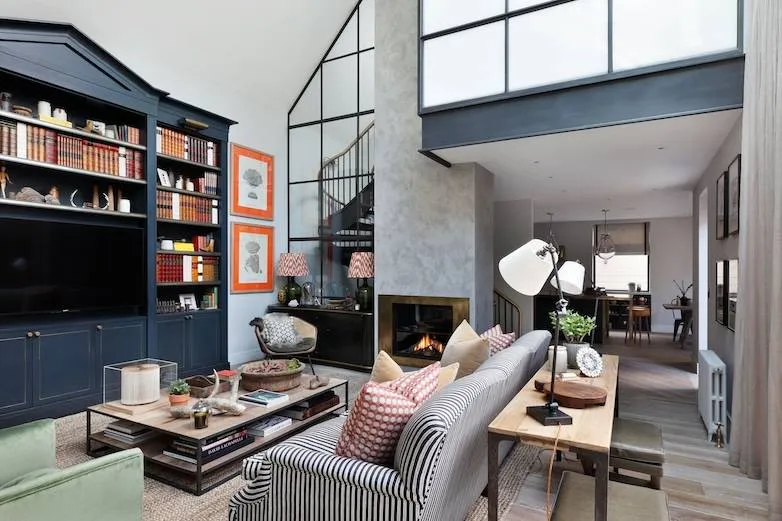
New house with façade retention, Kensington, W8 with Turner Pocock Studio
Historically, some residential projects, particularly apartment refurbishments or internal reconfigurations, may have involved only an interior designer, with limited architectural input.
The introduction of the Building Safety Act 2022 has adjusted that landscape.
The Act introduced the role of Principal Designer (Building Regulations), with formal responsibility for planning, managing and monitoring compliance with the Building Regulations during the design phase. As a result, projects that previously may not have required an architect now require a suitable professional to undertake this statutory role.
In many interior-led schemes, this means the architect’s role is more executive and compliance-focused, providing regulatory oversight, technical coordination and structured documentation so the project can proceed clearly and safely.
For Higher-Risk Buildings (HRBs), the requirements are more structured and include:
Even where projects are not classified as HRBs, expectations around documented compliance and clearly defined professional responsibility have increased.
In practice, this allows interior designers and clients to focus on the design, knowing that statutory obligations and technical accountability are being managed carefully in the background.
Interior designers should ideally be involved while layouts are still being explored. Their insight into proportion, circulation, furniture and spatial experience frequently shapes the architecture itself.
Wall positions, door openings, ceiling strategies and service routes are rarely purely architectural decisions. Early coordination ensures that interior ambition and technical logic evolve together.
Clear responsibility avoids duplication, tension and uncertainty. When each discipline understands its remit, creativity operates within a secure framework.
The architect retains responsibility for planning, Building Regulations compliance and the Principal Designer (Building Regulations) role. Interior proposals should therefore be developed with these parameters understood, not as constraints, but as part of the design process.
Structure, mechanical and electrical services, acoustic requirements and environmental performance intersect constantly with interior design decisions. Ongoing coordination ensures that technical requirements do not undermine design intent at a later stage.

Refurbishment and extension of semi-detached Villa in Holland Park with Collett Zarzycki and Todhunter Earle
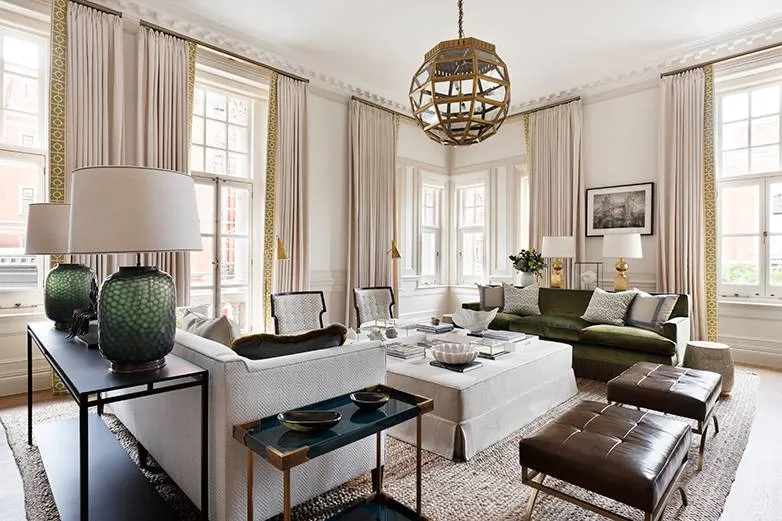
Grade II Listed mansion block apartment with Turner Pocock Studio
Interior designers are sometimes appointed after the architect has developed the internal layouts. While this approach can work on simpler projects, it often misses opportunities, particularly on complex refurbishments or high-value homes where interior decisions materially influence the architecture.
Bringing the interior designer into the project early allows:
Many clients understandably wish to explore layouts initially with their architect. However, interior designers bring a different lens to spatial planning, often proposing alternative arrangements that improve flow, functionality and long-term use. In practice, this input frequently influences wall positions, door locations and room hierarchies.
In listed or heritage buildings, and in estate-controlled properties, the timing of the interior designer’s appointment is even more important. Internal layout changes, alterations to doors and joinery, or interventions affecting historic fabric may require Listed Building Consent, estate approval or formal technical justification under a Licence to Alter. Early collaboration ensures that these elements are incorporated into the statutory and approval strategy from the outset.
While loose furniture, fittings and equipment (FF&E) are not typically part of the building contract, they should still be considered early in the design process.
FF&E decisions influence:
By allowing for FF&E at an early stage, the architectural and interior design can be aligned, reducing late-stage compromise and ensuring the completed home functions as intended.
Beyond coordination and statutory compliance, an architect brings a broader and more strategic perspective to residential projects, particularly where significant refurbishment or reconfiguration is involved.
Interior transformation often presents an opportunity to address underlying issues within the building fabric and infrastructure. While measures such as insulation upgrades, ventilation improvements or services renewal are sometimes viewed primarily as energy or cost-saving exercises, in high-end residential projects they are more appropriately understood in terms of comfort and performance.
A considered architectural review may include:
In substantial refurbishments, it is important to look beyond the visible interior and consider the infrastructure that supports it. Stable internal temperatures, good air quality, acoustic comfort and reliable services all contribute significantly to the lived experience of a home.
When these aspects are addressed alongside interior design, the result is not only a refined aesthetic outcome, but a home that performs quietly and comfortably over the long term.
The precise division of responsibility will vary depending on the project and appointments, but clarity is essential.
Typically:
In collaborative projects, both disciplines contribute to the evolution of internal plans. The objective is not separation, but clarity, ensuring that decisions are documented, coordinated and delivered without ambiguity.
Across residential projects, successful outcomes depend less on rigid boundaries and more on carefully managed collaboration. When architects and interior designers work together from the outset, with shared understanding of spatial ambition, technical requirements and regulatory responsibilities, projects move forward with greater clarity and fewer compromises.
Clear definition of responsibility does not restrict creativity; it protects it. By structuring the relationship thoughtfully, interior design ambition can be realised fully, supported by robust architectural coordination and technical delivery.
For clients and consultants alike, this approach provides reassurance: design quality is preserved, complexity is managed quietly, and the finished home reflects a genuinely integrated vision.
Our portfolio includes numerous residential schemes where we have successfully collaborated with interior designers, both as lead architect and in executive or compliance-focused roles.
If you are an interior designer seeking architectural support, whether for technical coordination, Principal Designer (Building Regulations) duties, Listed Building Consent, estate approvals or Licence to Alter applications, we would be pleased to assist.
If you are a client wishing to appoint an independent interior designer alongside an architect, we are experienced in structuring that relationship clearly and collaboratively.
And if you have a project requiring support with Higher-Risk Building procedures, Building Safety Act compliance, listed buildings or estate-controlled properties, we would be happy to discuss how we can help bring clarity and confidence to the process.

BA (Hons), Dip Arch, RIBA
Director

BA (Hons), Dip Arch, RIBA
Director

BA (Hons), Dip Arch, RIBA
Director