Leasehold flats often have outdated windows, many of which are single-glazed, draughty, and inefficient in terms of heat loss, overheating, and acoustic performance. As such, leaseholders frequently wish to upgrade their windows as part of a refurbishment project. However, leasehold properties come with additional complications that must be carefully navigated.
BB Partnership’s Expertise
BB Partnership has extensive experience working on projects across London’s major estates, including Grade I listed properties on the Crown Estate, Grade II listed buildings in the Grosvenor, Cadogan, and Wellcome Trust Estates, as well as projects on the Eyre Estate and Portman Estate. We also work on privately managed apartments, making us well-placed to advise on window repair and replacement in existing properties.
Additionally, our Passive House Design capabilities ensure that window performance is a critical consideration in our approach to energy-efficient refurbishment.
DOWNLOAD THE BB PARTNERSHIP BROCHURE
The Problem: Freeholder Consent and Legal Considerations
While leaseholders may wish to repair or replace windows, the windows themselves form part of the external fabric of the building and are typically owned by the freeholder. This means:
Freeholder Consent: Any window replacement requires permission from the freeholder. The freeholder may impose conditions on window specifications to ensure uniformity and control the installation process, which may require scaffolding.
Planning Considerations: If the building is within a conservation area, planning approval will be needed. If the property is listed, Listed Building Consent is required along with planning approval.
Regulatory Compliance: Works must comply with The Construction (Design and Management) Regulations 2015 (CDM regulations) and The Building Regulations 2010 (amended in 2023).
High-Risk Buildings (HRBs): If the building is classified as a High-Risk Building (HRB), approval from the Building Safety Regulator is required, which can be time-consuming.
Window Upgrade Options
When replacing or upgrading windows, leaseholders must consider conservation regulations, energy efficiency, and acoustic performance. Historic England provides useful guidance on upgrading historic windows while preserving heritage value.
Retention and Refurbishment of Existing Windows
Installing draught-proofing strips can significantly improve thermal and acoustic performance.
Historic England’s research found that simple maintenance (sealing cracks, eliminating gaps) can reduce air infiltration by 33% and air exchange by up to 86%.
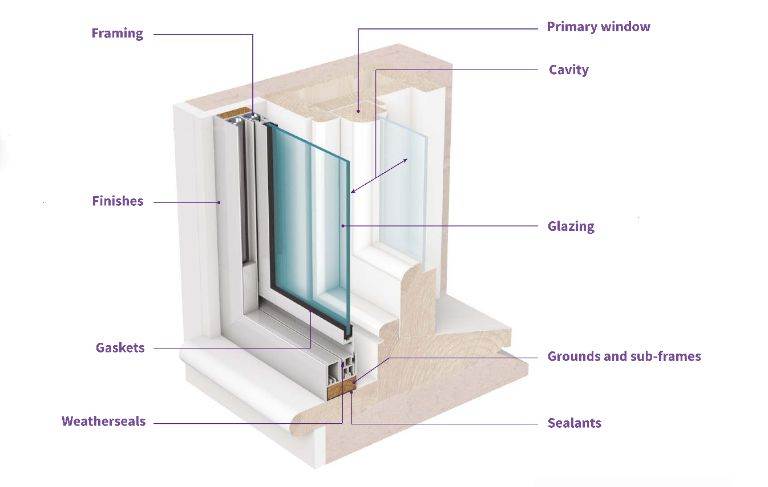
Secondary glazing installs an independent window system inside the existing window frame, improving thermal performance without altering the original windows.
Research shows that secondary glazing with a low-emissivity (low-E) coating can reduce heat loss by over 60%
In conservation areas, replacement windows must match the original style. If the current windows are not historically appropriate, new ones must enhance the conservation area’s character.
Listed buildings require a case-by-case assessment, referencing Historic England guidance.
Slimline double glazing is often permitted in conservation areas.
Triple glazing and vacuum-sealed glazing offer superior thermal and acoustic performance, with vacuum glazing achieving U-values as low as 0.6W/m²K, making them a good option for energy-efficient upgrades in suitable settings.
When replacing windows, it is also worth reviewing how the windows open and are cleaned to ensure ease of use and maintenance.
Consideration should also be given to how the windows will be dressed, for example having built-in blackout blinds, which help ensure a good seal for improved light control and insulation.
Building Regulations and Compliance
New windows are classified as controlled fittings under Building Regulations and must meet standards for:
Thermal performance (U-value requirements)
Safety (impact resistance and fire safety)
Ventilation (adequate airflow and trickle vents where applicable)
A Certificate of Compliance is required, which can be obtained via:
Building Control application to the local authority, approved inspector or in the case of HRB’s the BSR.
Consequences of Window Upgrades
While new or refurbished windows improve energy efficiency, they can also affect:
Ventilation & Air Quality
Older windows, despite being draughty, provide background ventilation.
Reducing air leakage requires compensatory ventilation solutions, such as trickle vents or mechanical ventilation with heat recovery (MVHR).
Properties with solid fuel, gas, or oil-burning appliances must ensure proper ventilation in line with Approved Document J of the Building Regulations.
Summer Overheating Risks
Single-glazed windows contribute significantly to summer overheating, as they allow excessive solar heat gain and fail to insulate effectively.
Upgrading to double or triple glazing can reduce overheating, eliminating the need for energy-intensive comfort cooling solutions that many assume are necessary.
Acoustic Performance
High-performance windows significantly reduce external noise, enhancing sleep quality and indoor comfort.
Thermal Comfort
Reducing cold spots prevents air movement that feels like a draught, improving occupant comfort and reducing energy bills.
Better insulation, including windows, also supports the introduction of air source heat pump systems by reducing the heating load for the property.
Next Steps
To proceed with a window replacement project in a leasehold property:
Engage early with the freeholder to understand restrictions and potential approvals.
Review planning and listed building requirements to determine necessary consents.
Assess the impact on ventilation, overheating, and internal comfort.
If scaffolding is required, consider coordinating with other leaseholders or freeholders for broader façade maintenance works.
At BB Partnership, our extensive experience in delivering projects from concept to completion ensures that all key considerations are addressed early, streamlining the approval process and project execution.