

Can air conditioning be installed in a listed building in Camden? In many cases it can but planning permission and listed building consent are usually required, and applicants must demonstrate that passive design measures have been explored before comfort cooling is approved.
Many homeowners in central London are beginning to ask this question.
Hotter summers, increasingly airtight homes and the urban heat island effect mean that overheating is becoming an increasing concern in historic London houses. Yet planning policy, particularly in boroughs such as Camden, strongly discourages comfort cooling and requires designers to demonstrate that passive solutions have been fully explored before active cooling is introduced.
At BB Partnership, we regularly work on the refurbishment of historic residential buildings across London, including listed terraces and houses within conservation areas. Projects of this type often require balancing heritage protection with modern expectations of environmental performance and internal comfort.
A recent project we completed in Chester Terrace in Regent’s Park illustrates how these challenges can be successfully addressed.
Overheating in London homes is becoming more common, and several factors are contributing to the problem.
First, summer temperatures are rising. The UK has already experienced temperatures above 40°C, and climate projections suggest that heatwaves will become more frequent and more intense.
Second, many homes are becoming more airtight and better insulated as part of energy-efficiency improvements. These upgrades are essential for reducing carbon emissions and improving winter comfort, but they can also make it harder for buildings to dissipate heat during warm periods if ventilation strategies are not carefully designed.
Third, London’s urban heat island effect means that dense urban areas often remain significantly warmer overnight than surrounding rural areas. This reduces the ability of buildings to cool down at night, which is often when overheating becomes most uncomfortable.
Together, these factors mean that overheating is now an increasingly important consideration in both new buildings and historic refurbishments.
Many of the houses surrounding Regent’s Park — including the terraces designed by John Nash — present particular challenges in this respect. Their large sash windows, formal façades and protected architectural character mean that many of the passive measures commonly used to reduce overheating in modern buildings cannot easily be introduced.
Chester Terrace, Regent’s Park – Grade I listed Nash terrace overlooking Regent’s Park
London Borough of Camden
Managing overheating in a highly protected historic building where passive upgrades were limited
Installation of two air source heat pump units within a discreet enclosure on the roof terrace, providing comfort cooling to selected rooms
Planning permission and listed building consent granted, with no harm to the listed building or conservation area
The property on Chester Terrace forms part of John Nash’s early nineteenth-century terrace overlooking Regent’s Park, one of London’s most significant examples of Regency urban design.
The terrace is Grade I listed, placing it among the most highly protected buildings in the country. Any alterations must preserve the architectural character of the terrace and its relationship with the surrounding park landscape.
While the external architectural composition of the terrace is carefully protected, many of the interiors were substantially altered during twentieth-century rebuilding works. In this case the building was largely reconstructed in the 1960s, meaning that the internal plan form retains the traditional arrangement of front and rear rooms while much of the internal fabric is later.
This distinction between the highly protected exterior and the more adaptable interior was an important factor in determining how modern building services could be introduced.
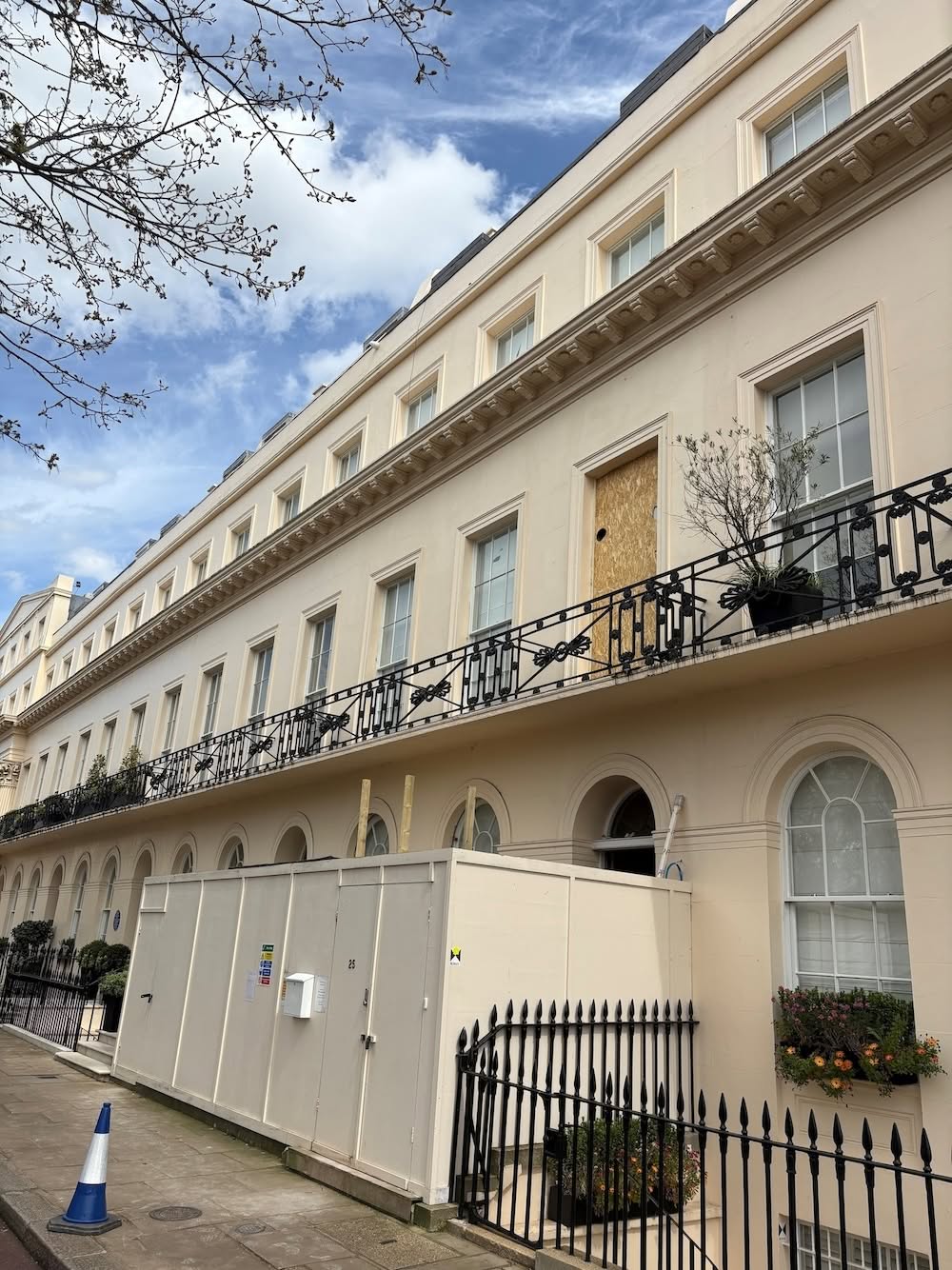
New front elevation windows fitted with mono-laminate glazing
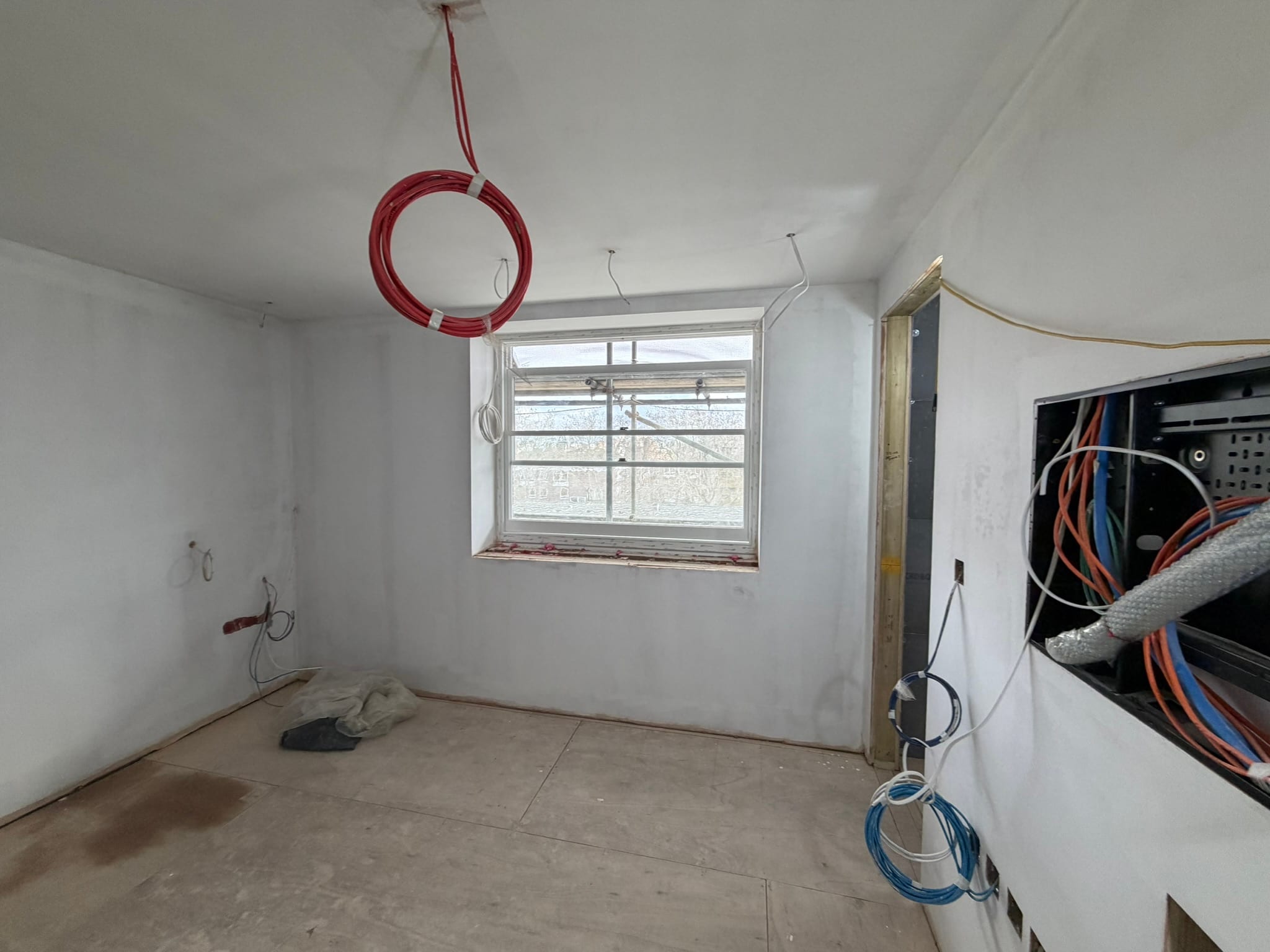
New slimline double-glazed units installed to the rear of the property
Before proposing any form of mechanical cooling, we first explored how overheating could be reduced through passive design measures.
These included the following:
An earlier application sought permission to replace the existing windows with double glazing on both front and rear elevations.
Following discussions with the council, consent was granted for:
While this improved thermal performance, the heritage constraints meant that further passive improvements were limited.
Thermal upgrades can also change the behaviour of historic buildings. For example, internal wall insulation can significantly reduce winter heat loss, but it also reduces the ability of solid masonry walls to absorb and release heat. If not combined with effective ventilation and solar control, this can increase the risk of heat being retained within the building during warm nights.
For this reason, overheating assessments are increasingly required when major thermal upgrades are proposed.
The next step was to undertake dynamic thermal modelling of the building’s internal conditions.
The modelling demonstrated that several principal rooms would exceed acceptable temperature thresholds even with passive measures in place, including passive ventilation, internal blinds and MVHR with air tempering.
This analysis formed the basis of the planning justification for introducing targeted comfort cooling.
Camden’s position is set out in Local Plan Policy CC2 (Adapting to Climate Change) and supporting planning guidance.
The borough follows the London Plan cooling hierarchy, which requires designers to prioritise passive measures before introducing active cooling.
The hierarchy requires consideration of:
In practice, Camden expects planning applications involving cooling to include dynamic overheating modelling demonstrating that passive solutions have been exhausted.
Although all London boroughs follow the London Plan framework, their interpretation of cooling policy varies.
Camden applies the cooling hierarchy particularly strictly, often requiring detailed evidence that passive measures have been fully explored.
Westminster tends to adopt a more pragmatic approach where overheating risk is demonstrated and plant equipment can be discreetly integrated into buildings.
The Royal Borough of Kensington and Chelsea focuses strongly on heritage impact and visual considerations but has historically been somewhat more flexible regarding comfort cooling in large residential refurbishments.
Understanding these differences early in the design process can help avoid unnecessary delays and redesigns.
Before introducing active cooling, a number of design strategies can significantly reduce overheating risk.
These include:
In many projects, a combination of these measures can successfully manage overheating without mechanical cooling.
However, in highly protected historic buildings, where some of these measures may be restricted, carefully designed cooling systems can sometimes provide the most balanced solution.
Projects involving highly protected historic buildings, particularly listed houses require careful balancing of heritage conservation, environmental performance and modern expectations of comfort.
Many historic houses face similar challenges when undergoing major refurbishment, particularly where improvements to building performance must be balanced with heritage protection.
For homeowners considering major refurbishments, thermal upgrades or new building services, understanding these issues early can significantly reduce planning risk and help ensure that proposals can be delivered successfully.

Yes, but it typically requires both planning permission and listed building consent. Camden’s policies require applicants to demonstrate that passive measures have been explored before active cooling is introduced.
Camden does not prohibit air conditioning, but proposals must comply with the London Plan cooling hierarchy and usually require overheating modelling.
Applications generally include:
Historic houses often have large windows, limited external shading and restrictions on upgrading glazing. These factors can increase solar heat gain while limiting opportunities to introduce modern passive cooling measures.
As London’s climate continues to warm, the issue of overheating in historic buildings is likely to become increasingly important in planning discussions.
Balancing heritage protection with occupant comfort will therefore remain a key challenge when refurbishing many of the capital’s historic homes.
Each building presents its own constraints, and addressing these issues early in the design process can significantly reduce planning risk while ensuring that proposals are both technically effective and sensitive to their historic context.

BA (Hons), Dip Arch, RIBA
Director

BA (Hons), Dip Arch, RIBA
Director

BA (Hons), Dip Arch, RIBA
Director