

When submitting a planning application, many applicants are told that a decision should be made within 8 weeks. But how often is that true? And what actually happens after an application is submitted?
This article outlines the official targets and the real-world performance of planning authorities in London, focusing on the areas BB Partnership most often works in, such as Westminster, Camden, Kensington & Chelsea, Islington, and Epping Forest.
We also look at the role of the agent submitting the application, a role that either we or the planning consultant carry out, but is equally appropriate if you have submitted an application yourself.
The national target for determining non-major planning applications (which includes most householder and small-scale development proposals) is:
Alternatively, if a Planning Performance Agreement (PPA) or an agreed extension of time is in place, the decision should be made within that extended period.
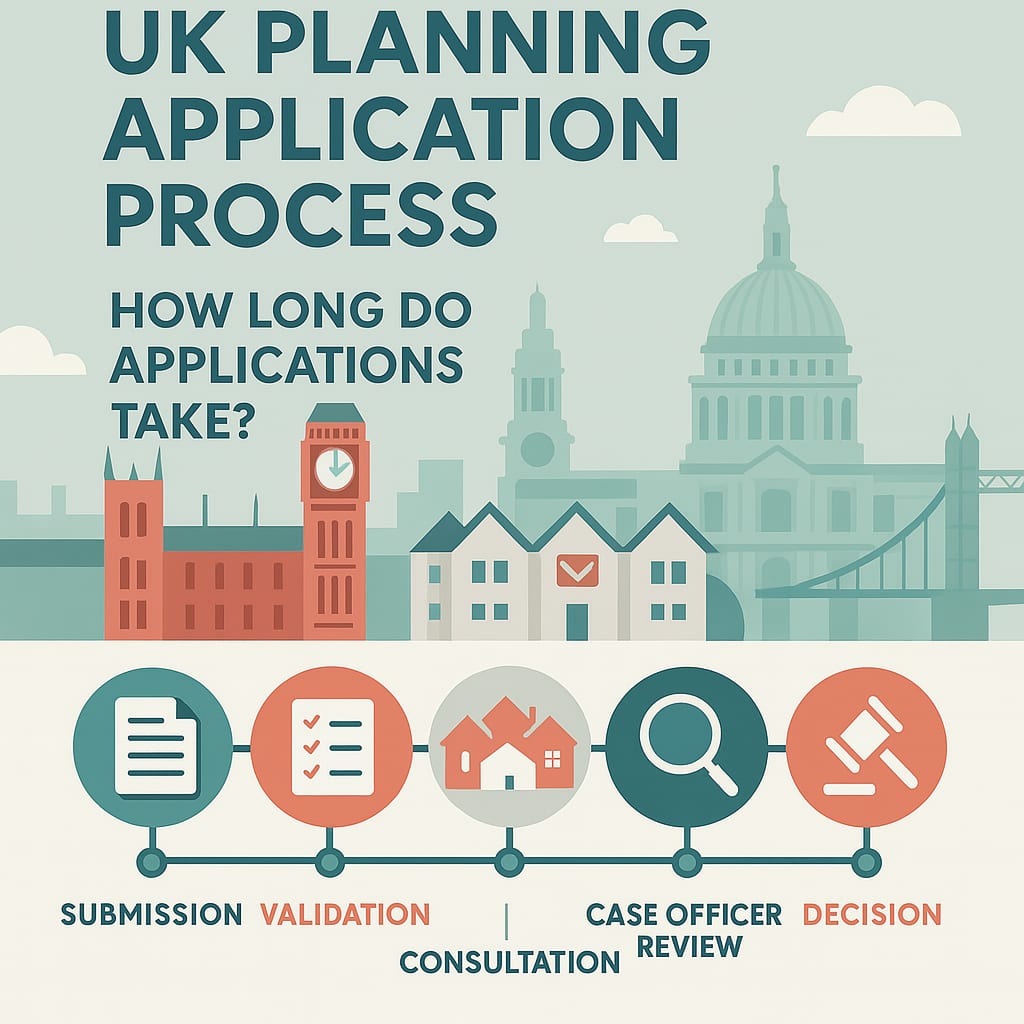
Once an application is submitted, the validation team checks whether it contains all the required documents, drawings, and fee. If anything is missing or incorrect, the application will not be registered, causing delays from the outset. It is important to note that the validation process itself can take some time, so a couple of weeks can easily pass before the council write back to advise that the application is invalid. Import point – Just because an application has been successfully submitted via Planning Portal does not mean the application is valid, that assessment is made by the relevant planning authority.
After validation, the application is made public and enters a consultation period, typically lasting 21 days. During this time, the local authority notifies:
After consultation, the planning officer assesses the application in detail. This includes reviewing comments, checking local and national policies, perhaps conducting a site visit, and drafting a recommendation.
A decision is then issued, either under delegated powers or referred to planning committee, ideally within the 8-week target or agreed time extension.
The latest government league table (Table P153, covering April 2023 to March 2025) reveals a different picture. In many boroughs, particularly in London, local authorities are falling short.
Here are the five worst-performing London boroughs:
| Borough | % Decided Within Target Time |
| Westminster | 78.4% |
| Newham | 80.6% |
| Enfield | 82.6% |
| Camden | 83.7% |
| Hackney | 84.9% |
Delays in planning decisions affect the viability of projects, financing, and construction timelines. For developers and homeowners, this creates uncertainty and often additional costs. It also means that having a clear and complete submission at validation is more important than ever.
At BB Partnership, we work proactively to minimise delays, the best way to do this is via early engagement through Applications for Pre-Application advice and Planning Performance Agreements (PPA’s) It is also critical to ensure that the application is supported by the input of other consultants who have formed part of a collaborative design team to ensure the proposals are in line with policy or if they are not then justification has been provided as part of the submission.
Most home extensions or alterations fall under a Householder Application. New dwellings or more substantial changes usually require a Full Planning Application. Some proposals, like changes of use or larger extensions, may require Prior Approval. A qualified architect or planning consultant can help identify the right route.
Yes, typically via a Pre-Application Advice service offered by the local authority. This provides early informal feedback that can help identify potential issues before submitting a full application.
You’ll need existing and proposed plans, a location plan, application forms, and often a Design and Access Statement. Depending on the site, additional reports may be required (e.g. heritage, tree, flood risk).
Missing documents can delay validation, but it must be remembered that these are simply the minimal requirements and where a specific issue has been identified then it would be advisable to address this and provide adequate justification, which could for instance require a daylight/sunlight report or a visual impact assessment.
If a scheme is likely to go to the parish council or committee then 3D visuals will help to show the scheme at its best rather than relying on 2D technical drawings, the same applies for improving the chances of positive engagement from neighbours.
A successful planning outcome starts well before submission. In today’s planning environment, where engagement is limited and resources are stretched, the best way to ensure progress is to submit a well-prepared, policy-aligned, and professionally justified application.
That means involving the right team early: from your architect and planning consultant to any technical specialists required to support the case. Investing time in the pre-application process, where available, can significantly reduce risk and improve your chances of approval.
At BB Partnership, we specialise in unlocking planning potential through clear strategy, policy expertise, and carefully crafted design. If you’re planning a project and want to give it the best possible start, we’d be happy to help, get in touch.

BA [Hons], Dip Arc, RIBA
Director

BA [Hons], Dip Arc, RIBA
Director

BA [Hons], Dip Arc, RIBA
Director